Wines
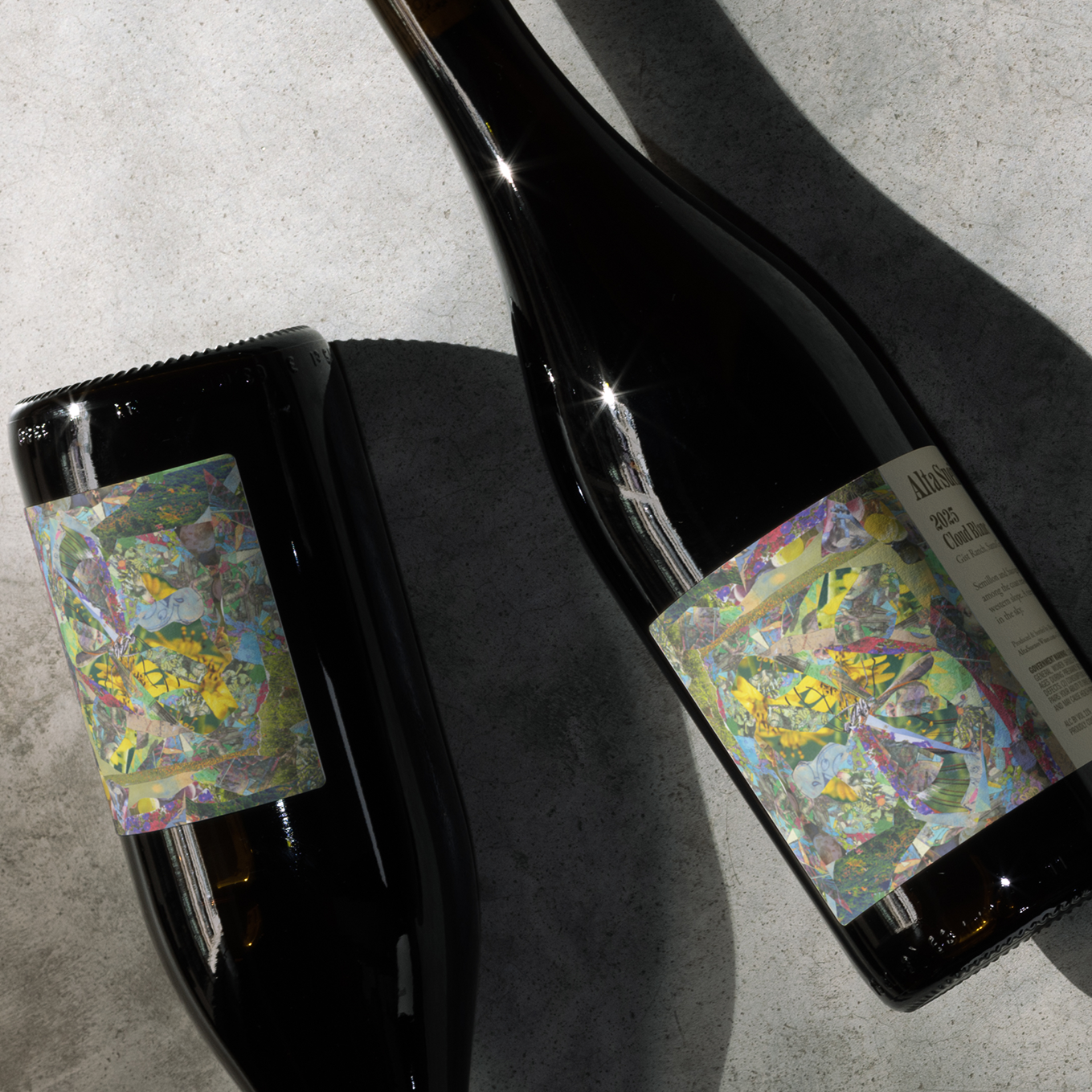
2025 Cloud Blanc
Gist Ranch, Santa Cruz Mountains
Co-fermented Semillon and Sauvignon Blanc from an organic site surrounded by coast redwoods on the AVA’s western slope. A vineyard in a forest in the sky.
Palate: Lemon verbena meets honeycomb. White grapefruit meets guava. Freshness meets structure. Pacific fog creates the perfect wine for a sunny day.
Site: Gist Ranch
AVA: Santa Cruz Mountains
Planted: 2000
Soils: Vaqueros Sandstone
Varieties: Semillon (70%), Sauvignon Blanc (30%)
Farming: Organic (non-certified)
Production: 47 cases
Method: Foot-pressed, barrel fermented
Yeasts: Wild, native
Stems: 100% whole cluster, foot-crushed
Élevage: Sur lie, 6 months
Cooperage: Neutral French oak
Btw us geeks:
Brix:*17.5º
pH:* 3.24
TA:* 7.33 g/L
Glu/Fru: <0.1 g/L
VA: 0.84 g/L
Total SO2: 0.027 g/L (<5 ppm free)
ABV: 11%
*juice panel post-crush
The Story
Sometimes you have to get unlucky in order to get lucky. This was one of those times. The fruit for this wine appeared while I was on the phone with Ken Swegles, organic viticulturist and Man-About-The-Santa-Cruz-Mountains. I'd called to tell him my tale of woe: A ton of white that I’d planned to buy had just fallen under the smoke plume of a nearby wildfire. "Ok, cool," was Ken’s response. I was dumbfounded until he finished the thought: "Wanna buy a ton of Semillon from the vineyard across the road from me?" The road in question was the Santa Cruz Mountains’ legendary Skyline Boulevard, and the vineyard was Gist Ranch, the organically-farmed estate of Thomas Fogarty Wines. I thought the opportunity over for about zero-point-five seconds before saying yes.The Place
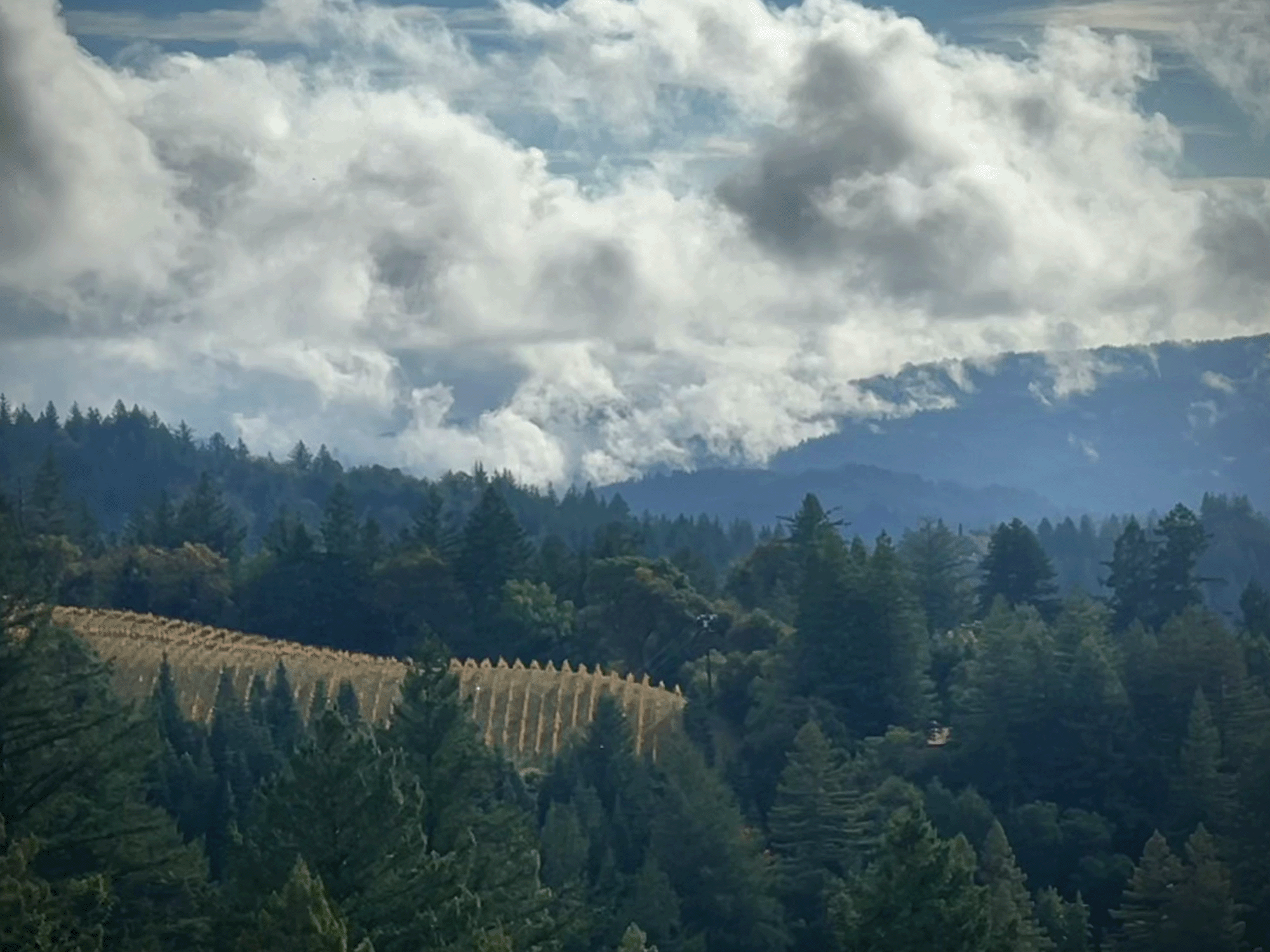
The western slopes of the Santa Cruz Mountains rise sharply from the Pacific, forming a craggy maze of ridgelines and steep canyons that channel morning fog and afternoon winds inland—and then back out to sea each evening, causing temperatures to drop quickly after sunset. At 17 miles from the surf line and 2,300 feet of elevation, Gist Ranch sits directly in the path of that daily pulse. Planted in 2000, Gist's vines are oriented in tight, north-to-south rows, tracing the contours of a steeply rounded mountaintop clearing surrounded by coast redwoods that nearly reach those marine layer clouds. Organically farmed and rooted in highly fractured Vaqueros Sandstone, Gist Ranch is truly a vineyard in a forest in the sky.The Wine
2025 wasn't a vintage for the faint-of-heart. The late-season heat spikes of the past two vintages simply failed to develop, forcing winemakers to roll the dice: shooting for higher sugar levels meant letting the fruit hang longer—and vastly increasing the botrytis and mildew pressure. The fruit that produced this wine only became available when another producer realized it would rot before it hit their ripeness target. They abandoned it just as it was finding its way into the ideal zone for the kind of white wine I love most.

Grapes were harvested the morning of Sept. 17. The first bin (100% Semillon) was gently foot-treaded, while the second (a mix of Semillon and Sauv Blanc) was left untouched. Both were given 12 hours of skin contact in the chiller room. This wine never saw a mechanical press: After the cold-soak, whole clusters were foot-crushed in the very bins that arrived from the vineyard. This process took several exhausting hours—alternating from one bin to the other, treading until the juice level rose to the point where it could be racked to a holding tank with an electric pump. That tank was then left to settle in the chiller until the evening of Sept. 21, when it was gravity-racked to neutral oak barrels for varietal co-fermentation and élevage on the lees. The result was a near-perfect ferment: primary completed on Oct. 6, with MLF kicking off naturally and finishing in early March. Small S02 additions were made just prior to the cold soak and again at bottling. No other interventions took place. Barrels were combined on April 12, 2026, and the wine was bottled the following day. This is an unfined, unfiltered wine—visible sediment may form. 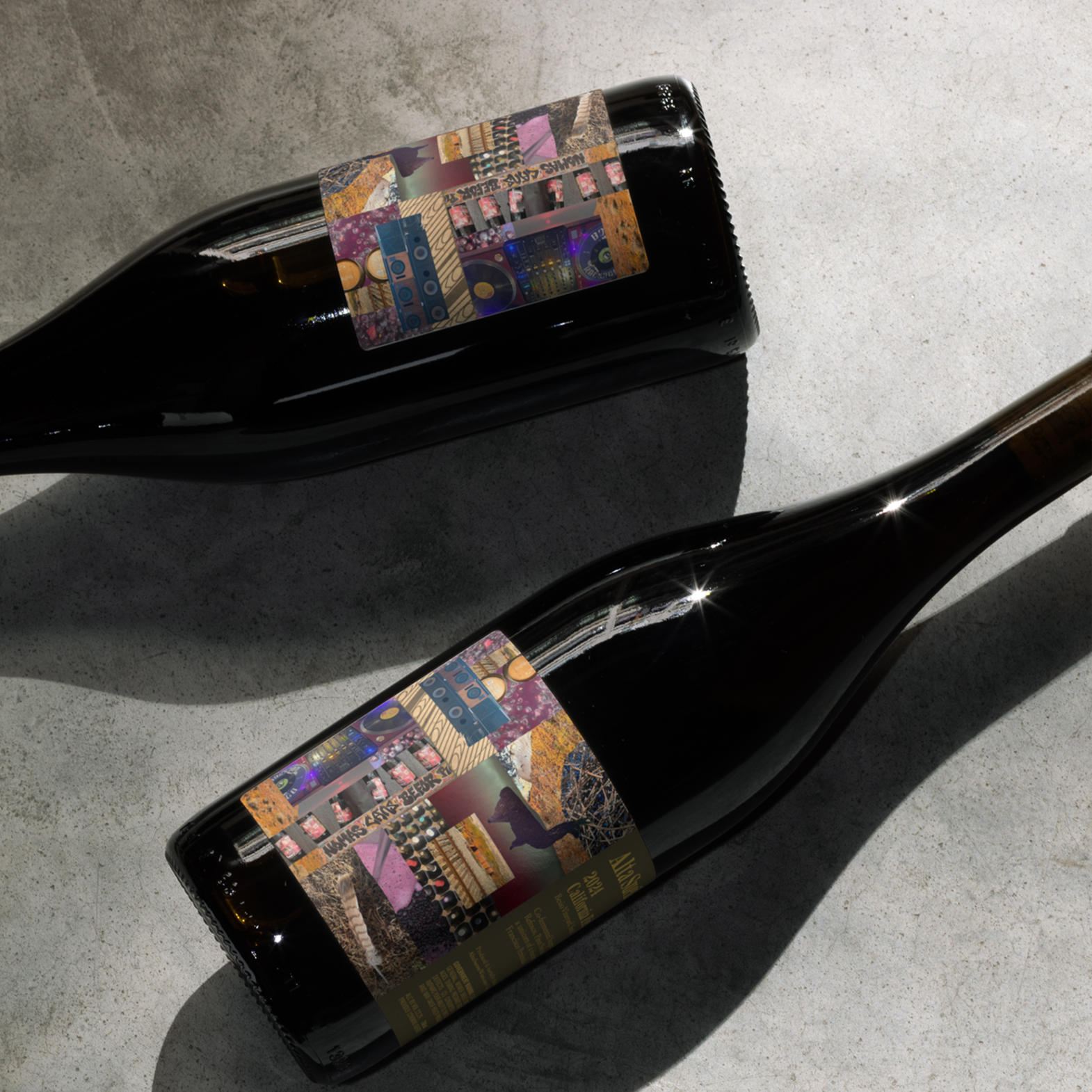
2024 California Field Blend
Besio Vineyard, Santa Cruz Mountains
Co-fermented Sangiovese, Dolcetto, Refosco, Pinot Noir and Syrah from an absolute unicorn of a vineyard on the San Francisco Peninsula.
Palate: Blackberries and Bing cherries. Brambly, stony and herbaceous—just like the trail that leads past the vineyard’s gate and into the redwoods beyond.
Site: Besio Vineyard
AVA: Santa Cruz Mountains
Planted: 1980
Soils: Silt, sand, gravel, clay
Varieties: Sangiovese, Dolcetto, Refosco, Pinot Noir
and Syrah
Farming: Organic (non-certified)
Production: 42 cases
Method: Co-fermentation
Yeasts: Wild, native
Stems: 20% whole cluster
Élevage: 18 months
Cooperage: Neutral French oak
Btw us geeks:
Brix:*21.6º
pH:* 3.63
TA:* 5.1 g/L
Glu/Fru: <0.1 g/L
VA: 0.7 g/L
Total SO2: <0.025 g/L (<5 ppm free)
ABV: 12.2%
*juice panel post-crush
The Story
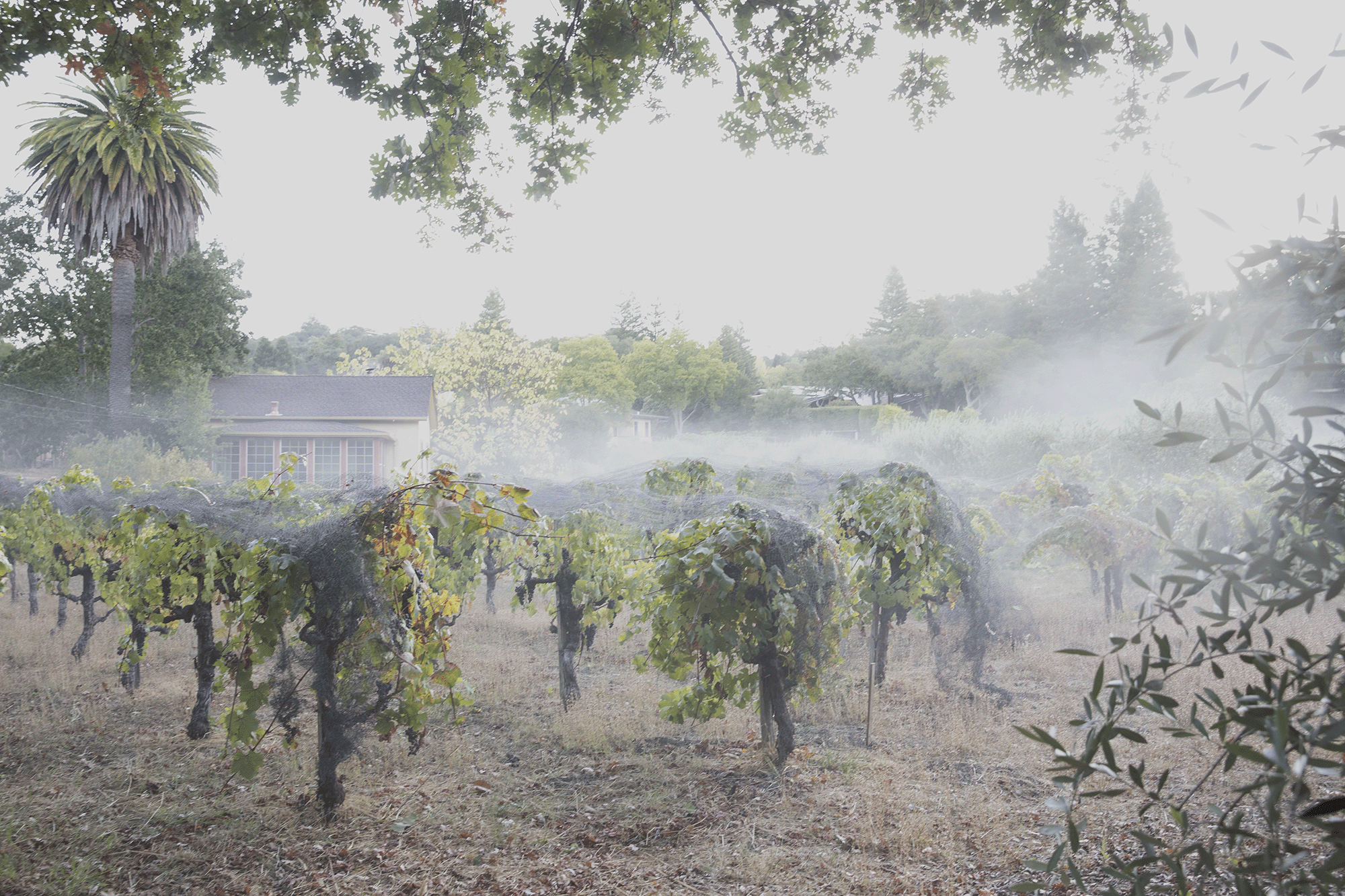
There are plenty of backyard vineyards on the Santa Cruz Mountains' eastern slopes. Sort that list for 45-year-old, own-rooted vines more common to Northern Italy than Northern California, and you'll find exactly one—Besio Vineyard. The site's single acre of head-trained, dry-farmed blocks produced only about 1,800 lb. of fruit in 2024, and it's now my job to turn it into a wine the late Carlo Besio would be proud to share with his family and friends. That makes the product of those vines into something more than a couple macrobins in the bed of a pickup bound for Buellton. It's the legacy of a son of immigrants, the story of a family, and a responsibility that I will never take for granted. The Place
Though most of the property is planted to vines, the name 'Besio Vineyard' is a bit of a misnomer. The place is simply home to several members of the Besio family—including Jane, who has lived among its vines, fruit trees, and bee hives for more than 50 years. Walking the property, it's easy to imagine the Portola Valley of 1980—a tiny hamlet shaded by oaks, Douglas fir and distant, towering redwoods faint in the morning fog. It's in this soil—Pleistocene sediments over Franciscan greenstone—that Besio's vines have taken root. Ten miles from the ocean and nearly within sight of the Bay, marine influences keep the vineyard cool throughout the day, while the ridgeline of Windy Hill blocks the coastal fog that would otherwise roll in overnight. The site is an ideal microclimate for Northern Italian varieties, and while the source of the original cuttings was known only to Carlo, his decision to plant them here was prescient. The Wine
I’ve always had a thing for field blends. For me, wines made by co-fermenting varieties across a single vineyard seem to paint a better picture of "place" than appellation-specific or single-varietal wines.

Besio Vineyard’s 2024 vintage was hand-harvested on Sept. 29, nearly two weeks earlier than the prior vintage. The extra daylight (and better planning) allowed us to keep track of where each block's fruit landed in the bins, as well as to ensure that the ripest fruit (as always, the Pinot Noir and Syrah) could be tipped whole-cluster into the fermenter before the remainder of the fruit was de-stemmed and added over the top. The fruit was then gently foot-treaded, cold soaked for two days, then treaded again before being left outdoors during daylight hours to warm the must and promote spontaneous fermentation. By Oct. 3 the cap was formed, and from that point the tank was kept inside the cellar and given twice-daily punchdowns. Though the wine was dry within seven days, we opted for an additional five days of maceration, bringing total skin contact to 17 days. It was pressed and racked to tank on the evening of Oct. 15, then gravity-racked into neutral oak on Oct. 17. Malolactic fermentation occurred naturally and finished in March of 2025.

By late August, the wine was integrated and drinking well—but it clearly had more to give. I held it in barrel another eight months and bottled on April 14, 2026.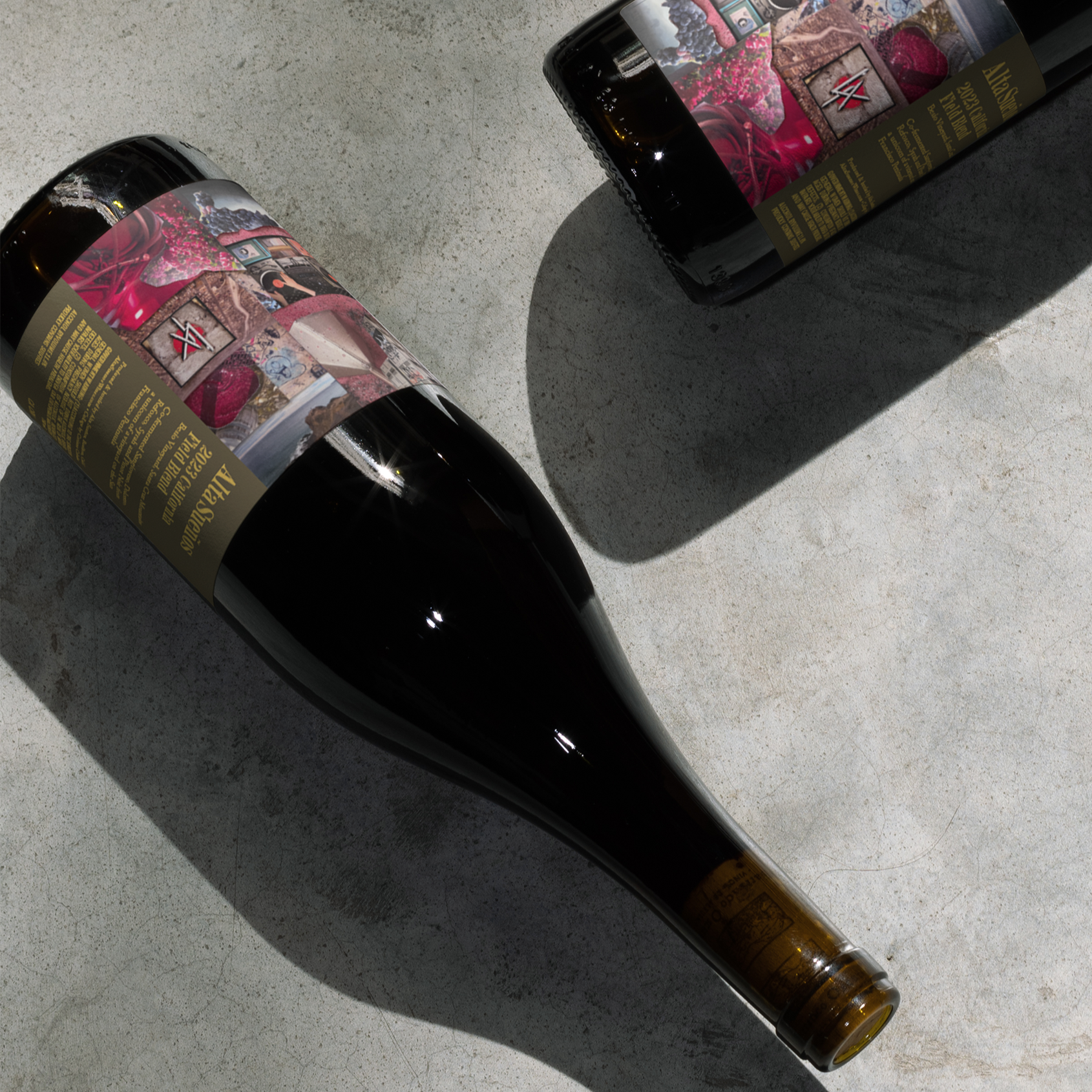
2023 California Field Blend
Besio Vineyard, Santa Cruz Mountains
Co-fermented Sangiovese, Dolcetto, Refosco, Pinot Noir and Syrah from an absolute unicorn of a vineyard on the San Francisco Peninsula.
Palate: Rose hips, red fruit, crushed stone, dead-sexy aromatic energy.
Site: Besio Vineyard
AVA: Santa Cruz Mountains
Planted: 1980
Soils: Silt, sand, gravel, clay
Varieties: Sangiovese, Dolcetto, Refosco, Pinot Noir
and Syrah
Farming: Organic (non-certified)
Production: 54 cases
Method: Co-fermentation
Yeasts: Wild, native
Stems: 100% destemmed
Élevage: 11 months
Cooperage: Neutral French oak
Btw us geeks:
Brix:*21.0º
pH:* 3.4
TA:* 5.7 g/L
RS: <1.3 g/L
VA: 0.58 g/L
Total SO2: 0.02 g/L (11.4 ppm free)
ABV: 11.6%
*juice panel post-crush
The Story
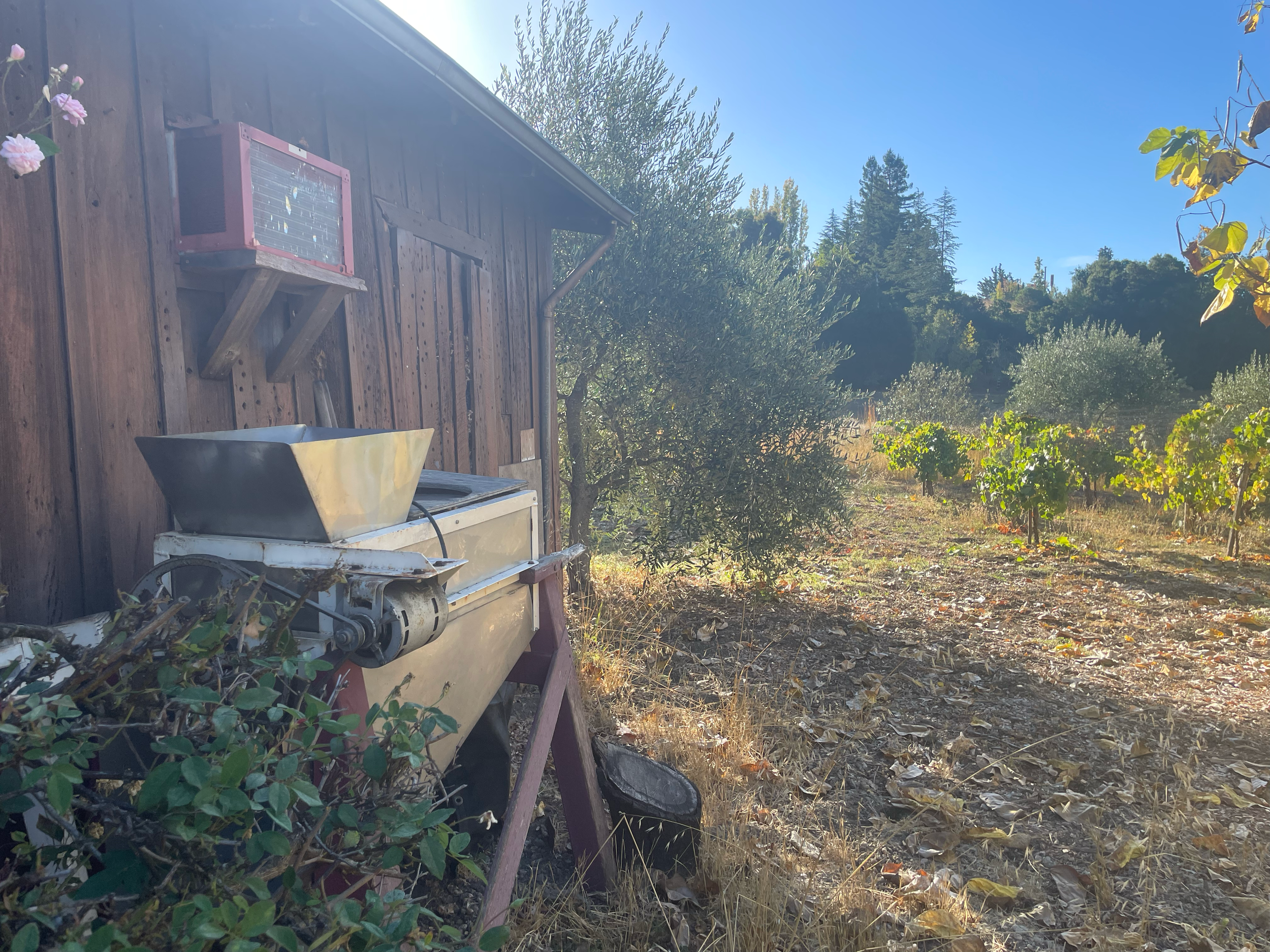
Inspired by family legends and travels to Italy, Carlo Besio planted the acre
surrounding his Portola Valley home to a mix of mostly Northern Italian vines.
Using simple equipment and methods his ancestors would know, Carlo made
wines to share at his own table. His vineyard was tended by hand and by
family from 1980 until his passing in 2016. Today, Besio Vineyard is farmed to
organic standards by Rhizos Viticulture – under the ever-watchful eye of Jane
Besio, who still resides on the property.
The Place
Portola Valley lies on the eastern slope of the Santa Cruz Mountains, 500 feet above San Francisco Bay. The vineyard’s soils consist of Pleistocene sediments (silt, sand, gravel and clay) overlying Franciscan Complex greenstone. Head-trained vines are divided into four blocks interspersed with fruit trees and honeybee hives, surrounded by a forest of coast redwood, oak and Douglas fir. Ten miles from the ocean, vineyard benefits from a cool, coastal climate, though compared to the AVA’s western slope, it retains more warmth overnight: perfect for bringing thick-skinned Italian fruit to phenolic ripeness while keeping sugar and acid levels in the zone for a fresh, balanced wine.The Wine
Fruit was hand-harvested at dawn on October 12th. No effort to sort the lot by varietal was made: 100% of the fruit was destemmed with equipment set to maximize intact berries, cold soaked overnight and foot-treaded the following morning. For the next several days the fermenter was moved outdoors into direct sunlight to warm the must and promote native yeast fermentation. A cap formed by day 3, at which point the tank was moved to a cool spot in the winery and given gentle punchdowns as necessary until October 24th, when the primary fermentation was complete.

After 36 hours of extended maceration, free run was racked away and the remaining must was bladder-pressed to 1.1 bar. All resulting wine was combined to a single tank, blanketed with CO2, and left to settle in the cellar. On November 3rd the tank was gravity-racked to two neutral French oak barrels and a stainless steel keg. Malolactic fermentation occurred naturally and was complete by mid-February. The finished wine was bottled without fining or filtration September 9, 2024.A word on sulfites & interventions: These wines exist because of native yeast fermentation and other spontaneous natural processes. Influence is exerted through temperature, atmosphere, time—and, when necessary—minimum-effective additions of biocompatible compounds, including potassium metabisulfite. I typically aim to leave ~0.025 grams of SO2 per liter of finished wine. That said, molecules are moving targets and each wine’s lab results are noted on this page. For me, the approach is less about popular and/or arbitrary notions of naturalness and more about maintaining microbial environments that allow vinification to be driven by the stuff that shows up in bins from the vineyard. In my experience, the better indicator of quality isn’t whether a particular intervention took place, but whether the winemaker’s decision to intervene resulted in a greater or lesser expression of the fruit’s vintage and place.